
There is no universal schedule for professional drain cleaning. The right interval depends on your property, water usage, the age and condition of the plumbing, previous clogs, and what a professional diagnosis reveals. A home with normally flowing drains may not need cleaning on a fixed calendar, while recurring clogs, slow drains, odors, gurgling, or multiple affected fixtures should be evaluated rather than ignored.
For homeowners, families, property owners, and small businesses in Modesto, the most reliable approach is to treat drain cleaning as a condition-based service. The goal is not simply to open a blocked pipe. The goal is to identify why the restriction formed and determine whether cleaning alone is appropriate.
Older plumbing systems may have more buildup, corrosion, scale, offsets, or damaged sections than newer systems. The pipe material and installation history also matter. A line with a smooth interior and no history of problems may require less attention than an older line with rough surfaces or recurring obstructions.
A camera inspection can help determine whether a drain problem is caused by removable buildup or a condition that cleaning will not permanently correct. This distinction is important because repeated cleaning can provide only temporary relief when the underlying pipe has a structural problem.
A larger household generally places more demand on kitchen, bathroom, laundry, and main sewer lines. Hair, soap residue, food particles, paper products, and other materials can accumulate at different rates depending on how the plumbing is used.
Families may notice a pattern during busy periods, such as holidays or gatherings, when kitchens, bathrooms, and laundry fixtures receive heavier use. That pattern does not automatically mean the property needs monthly or quarterly cleaning. It does mean the service interval should be based on observed performance and professional findings.
Small businesses have different drainage demands than residences. Restaurants, cafés, food-preparation areas, salons, offices, and other commercial properties may experience higher usage or specialized waste concerns.
Food-service businesses must take particular care with fats, oils, and grease. The City of Modesto’s FOG guidance advises businesses to prevent grease from entering the sanitary sewer and to maintain applicable grease traps or interceptors. Cleaning and documentation requirements depend on the type of equipment and the facility’s operations.
Professional drain cleaning should support, not replace, daily maintenance procedures. Kitchen staff should scrape grease and food residue into appropriate waste containers, use drain screens, and follow the property’s grease-management program.
A drain does not need to be completely blocked before it deserves attention. Early symptoms can provide useful information about developing restrictions.
A clog that returns after plunging or basic cleaning may indicate buildup deeper in the branch line, a problem with the trap, or an obstruction in the main sewer line. Repeatedly treating the same fixture without identifying the cause can turn a small maintenance issue into a recurring service problem.
One slow sink may have a localized restriction. Several slow drains may point to a larger issue. Pay attention to whether the kitchen sink, tubs, showers, floor drains, or laundry fixtures are slowing at the same time.
A professional can determine whether the affected fixture has an isolated blockage or whether wastewater is having difficulty moving through a shared or main line.
Persistent sewage odors near drains, cleanouts, bathrooms, or outdoor plumbing access points should not be treated as a normal part of plumbing operation. Odors may be associated with buildup, a dry trap, a venting issue, or a sewer-line concern.
The correct response depends on the location and pattern of the odor. Cleaning may help in some cases, but an inspection may be more appropriate when the odor returns.
Gurgling from a toilet or drain can occur when air is displaced by restricted wastewater flow. It may also relate to venting or a developing main-line obstruction. Gurgling is especially important when it occurs with slow drainage, odors, or changes in toilet water levels.
When several fixtures back up or drain slowly, the issue may be beyond a single sink or shower. Multiple affected fixtures can indicate a restriction in a shared branch or the main sewer line.
At that point, continuing to use chemical drain openers or repeatedly clearing one fixture may not address the actual problem. A professional evaluation can help locate the affected section before more disruptive symptoms develop.

Routine drain cleaning is generally used to remove buildup or an obstruction before it causes a larger disruption. It may be appropriate when a drain is gradually slowing, a property has a known history of buildup, or a professional recommends maintenance based on previous findings.
An urgent sewer problem is different. Consider prompt professional attention when:
If sewage is backing up, limit water use until the source is identified. Keep children and pets away from contaminated water, and avoid mixing or adding drain chemicals. A public wastewater utility may need to determine whether the problem is on the public side of the system or on the private property.
Drain cleaning methods are not interchangeable. A technician may use mechanical equipment, specialized cleaning tools, or other methods selected for the pipe, obstruction, and access point. The correct method depends on what is found.
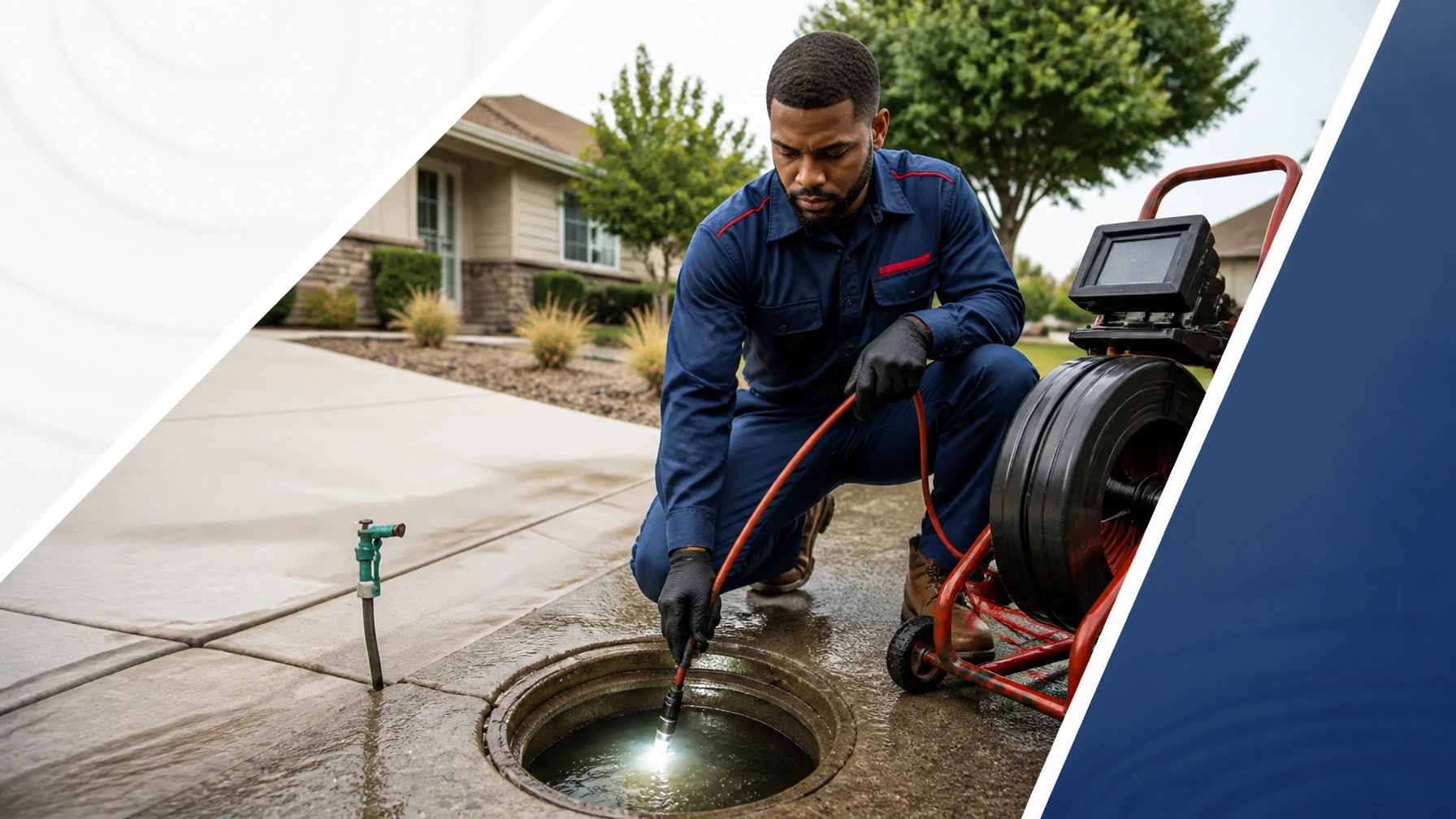
At 3D Green Plumbing, we take a diagnostic-first approach. We begin by listening to the symptoms, reviewing the affected fixtures, and assessing the plumbing conditions. When the situation calls for a closer look, a waterproof camera can travel through the drain or sewer line and provide a real-time view of the interior.
A camera inspection may reveal:
This process helps us recommend only the work that fits the actual condition. Cleaning may be enough when the pipe is structurally sound and the restriction is removable. Repair or another solution may need to be considered when the inspection identifies damage.
You can learn more about our sewer camera inspection services in Modesto and our full-service plumbing solutions.

Good drain maintenance starts with preventing unsuitable materials from entering the plumbing.
These habits can reduce unnecessary buildup, but they cannot correct damaged pipes, poor drainage, root intrusion, or an obstruction beyond the fixture trap.
Instead of choosing an arbitrary monthly or yearly appointment, consider these questions:
If the plumbing is performing normally and there is no history of recurring issues, a professional can help determine whether routine monitoring is sufficient. If symptoms are returning, the next step should generally be evaluation and diagnosis rather than simply repeating the last cleaning.

There is no schedule that applies to every home. The appropriate frequency depends on usage, pipe condition, property age, previous blockages, and diagnostic findings. A professional can recommend an interval after reviewing the system and the reason for prior problems.
Not necessarily. A home with normal drainage and no history of recurring problems may not need cleaning on a fixed annual schedule. Preventive service may be appropriate when a property has known risk factors or when a professional identifies buildup that could restrict flow.
Recurring clogs should be evaluated. Cleaning may restore flow, but a camera inspection can help determine whether roots, grease, damage, offsets, or another condition is causing the problem to return.
No. A slow drain may have a localized obstruction, a trap issue, or a venting concern. When several fixtures are slow or a slow drain is accompanied by gurgling and odors, the main line becomes more important to evaluate.
The business should follow its grease-management procedures, prevent fats, oils, and grease from entering drains, maintain required grease-control equipment, and arrange professional evaluation when flow problems recur. The City of Modesto provides specific FOG best-management information.
Cleaning can remove certain obstructions, but it does not repair a cracked, collapsed, severely offset, or otherwise damaged pipe. A camera inspection helps distinguish a removable blockage from a condition that may require repair.
Drain cleaning removes or breaks through an obstruction. A sewer camera inspection shows the interior of the pipe so the cause and location of a problem can be assessed. They may be used together, but one does not replace the other.
The right drain-cleaning schedule is based on evidence: how your plumbing performs, how often symptoms return, and what the lines actually contain. 3D Green Plumbing uses advanced diagnostic technology, honest recommendations, and careful workmanship to help homeowners and businesses in Modesto choose a practical solution with minimal disruption.
Contact 3D Green Plumbing through our service form to discuss recurring clogs, slow drains, sewer odors, or a professional drain-cleaning evaluation.
{"@graph":[{"@type":"Article","image":["https://cdn.marblism.com/uB69Zlyktml.webp","https://cdn.marblism.com/wFm4GFYEipT.webp","https://cdn.marblism.com/LRsMxoCMijB.webp","https://cdn.marblism.com/TDauLVfPUv9.webp"],"author":{"name":"3D Green Plumbing","@type":"Organization"},"headline":"How Often Should You Schedule Professional Drain Cleaning in Modesto?","keywords":["drain cleaning Modesto CA","professional drain cleaning","sewer camera inspection Modesto","recurring drain clogs"],"publisher":{"url":"https://3dgreenplumbing.com","name":"3D Green Plumbing","@type":"Organization"},"description":"Learn how property type, usage, symptoms, pipe condition, and professional diagnosis affect drain-cleaning frequency in Modesto, CA.","dateModified":"2026-08-22","datePublished":"2026-08-22","articleSection":"Drain & Sewer","mainEntityOfPage":{"@id":"https://3dgreenplumbing.com/","@type":"WebPage"}},{"@type":"FAQPage","mainEntity":[{"name":"How often should a Modesto home receive professional drain cleaning?","@type":"Question","acceptedAnswer":{"text":"There is no schedule that applies to every home. The appropriate frequency depends on usage, pipe condition, property age, previous blockages, and diagnostic findings.","@type":"Answer"}},{"name":"Is annual drain cleaning necessary if my drains work normally?","@type":"Question","acceptedAnswer":{"text":"Not necessarily. A home with normal drainage and no history of recurring problems may not need cleaning on a fixed annual schedule.","@type":"Answer"}},{"name":"Should recurring clogs be cleaned or inspected?","@type":"Question","acceptedAnswer":{"text":"Recurring clogs should be evaluated. Cleaning may restore flow, while a camera inspection can help identify roots, grease, damage, offsets, or another recurring cause.","@type":"Answer"}},{"name":"Are slow drains always a sewer-line problem?","@type":"Question","acceptedAnswer":{"text":"No. A slow drain may have a localized obstruction, a trap issue, or a venting concern. Multiple slow fixtures with gurgling or odors may indicate a main-line issue.","@type":"Answer"}},{"name":"Can drain cleaning fix damaged sewer pipes?","@type":"Question","acceptedAnswer":{"text":"Cleaning can remove certain obstructions, but it does not repair a cracked, collapsed, severely offset, or otherwise damaged pipe.","@type":"Answer"}}]}],"@context":"https://schema.org"}
